
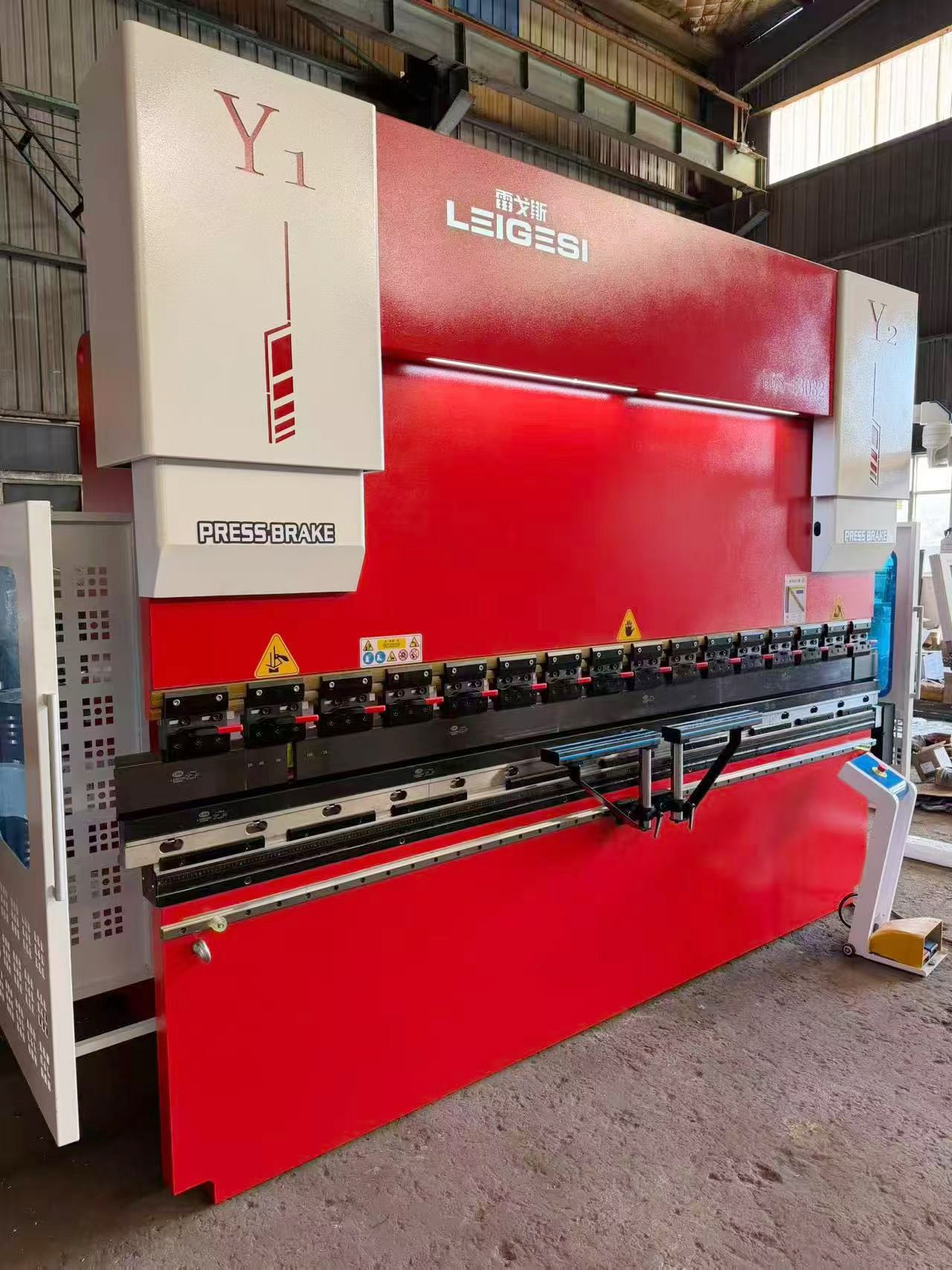
How to Choose a Bending Machine Without Falling into Traps: A Practical Guide for International Buyers
Buying a bending machine is a significant investment. The wrong choice can lead to endless production delays, scrap parts, and unexpected costs. Many buyers, especially those new to the industry, fall into common traps that turn a promising purchase into a financial headache.
This guide will walk you through the three most common customer confusions and provide professional advice to help you make a smart decision.
1. The “Specification Mismatch” Trap: Bigger Isn’t Always Better
The Customer’s Confusion:
“I need to bend thick steel, so I should buy the highest tonnage machine I can afford. A 200-ton machine must be better than a 100-ton machine, right?”
The Reality Check:
This is the most common mistake. Buying a machine that is too powerful for your needs is a waste of money. More importantly, it can actually cause poor quality bends.
- Overpowered Problems: If you use a 200-ton machine to bend thin sheet metal, you risk “over-bending” or damaging the material. The machine’s force is too great for the delicate material.
- The “Deflection” Factor: All machines bend slightly under pressure. A longer machine (e.g., 4 meters) will bend more in the middle than a shorter one. If you buy a long, high-tonnage machine for small parts, you’ll constantly struggle with inconsistent angles across the length of the part.
Professional Solution:
- Calculate Your Real Needs: Use the “Bending Force Chart” provided by manufacturers. For example, bending 3mm mild steel over a 3-meter length typically requires around 100 tons. Don’t buy a 200-ton machine unless you regularly bend 6mm steel.
- Think About Length: If 80% of your work is on parts shorter than 2 meters, consider a 2.5-meter machine instead of a 4-meter one. The shorter machine will be more rigid, produce more consistent results, and cost less to purchase and operate.
2. The “Hidden Cost” Trap: The Cheapest Price is Often the Most Expensive
The Customer’s Confusion:
“I found two machines with the same specifications. One is $30,000 and the other is $50,000. The cheaper one must be a better deal.”
The Reality Check:
In the world of industrial machinery, a price that is significantly lower than the market average is a major red flag. The initial savings will be quickly erased by downtime, repairs, and poor performance.
- Low-Quality Components: Cheap machines often use low-grade steel for the frame. This leads to permanent deformation over time, making it impossible to hold precision.
- Counterfeit Controls: Some suppliers install fake or “cloned” CNC control systems (like Delem or Cybelec). These systems crash frequently, cannot be updated, and have zero technical support.
- Zero After-Sales: The $30,000 machine might come from a small trader with no factory. When a hydraulic cylinder leaks or a motor fails, they will disappear, leaving you with a broken machine and no spare parts.
Professional Solution:
- Demand Factory Proof: Ask for a live video from the factory floor showing the machine’s serial number. A real manufacturer can show you the welding and assembly process.
- Check the “Guts”: Open the electrical cabinet. Look for branded components (Siemens, Schneider, etc.). Ask for official software authorization certificates.
- Verify Weight: A 100-ton, 3-meter machine should weigh around 8-10 tons. If a supplier’s machine is much lighter, it means they have used less steel, which equals less rigidity and a shorter lifespan.
3. The “Precision Illusion” Trap: The Machine is Perfect, But the Parts are Wrong
The Customer’s Confusion:
“I bought a CNC machine with 0.01mm repeatability, but my bend angles are still off by 2 degrees. The machine must be defective.”
The Reality Check:
This is a physics problem, not a machine problem. The machine’s slider can move to the exact same position every time (that’s the 0.01mm repeatability), but metal has a memory. It wants to spring back to its original shape after bending, a phenomenon called “springback.”
- Material Variability: If your steel supplier sends you a batch with a slightly different hardness, the springback will change. The machine, running the same program, will produce the wrong angle.
- Lack of Feedback: A basic CNC machine is “blind.” It moves to a position but doesn’t know if the angle is correct. It assumes the material will behave the same way every time.
Professional Solution:
- Invest in “Eyes”: For consistent high-precision work, you need a machine with an Angle Measuring System (like a laser sensor or a probe). This system measures the actual bend angle in real-time and automatically corrects the machine’s position to hit the target angle perfectly.
- Understand Your Process: Know if you are doing “Air Bending” (faster, less force) or “Bottom Bending” (more force, more consistent but requires specific tooling). Each method has different precision characteristics.
Final Checklist Before You Buy
- Test with Your Material: Never buy a machine based on a paper spec alone. Send a sample of your actual production material to the factory and have them bend it. Check the angle with a protractor.
- Clarify Warranty Terms: Get in writing what is covered (labor? shipping?) and what the response time is for international support.
- Calculate Total Cost of Ownership (TCO): Include the cost of shipping, installation, training, and annual maintenance. The machine with the lowest TCO is the best value, not the one with the lowest sticker price.
By focusing on real-world performance over paper specifications, and long-term reliability over short-term savings, you can avoid the common traps and invest in a bending machine that will serve your business for years to come.
Add a review
Your email address will not be published. Required fields are marked *